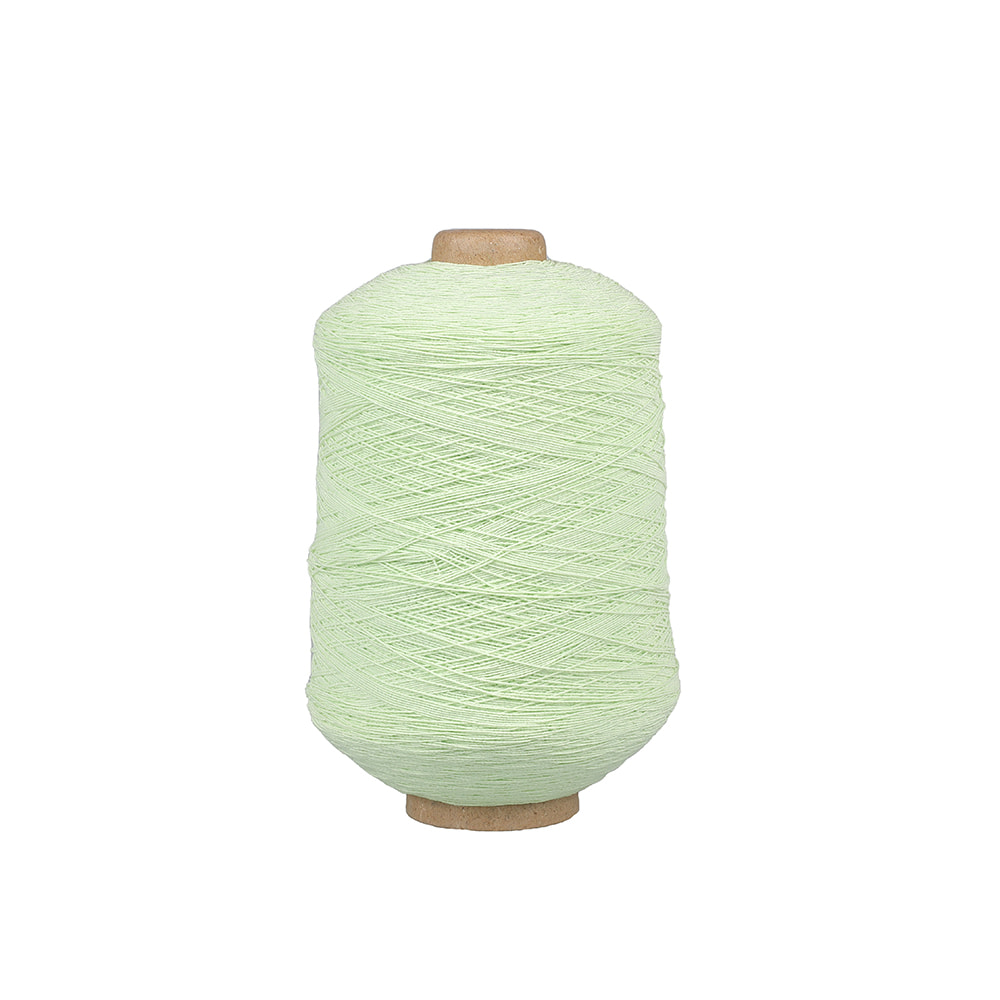
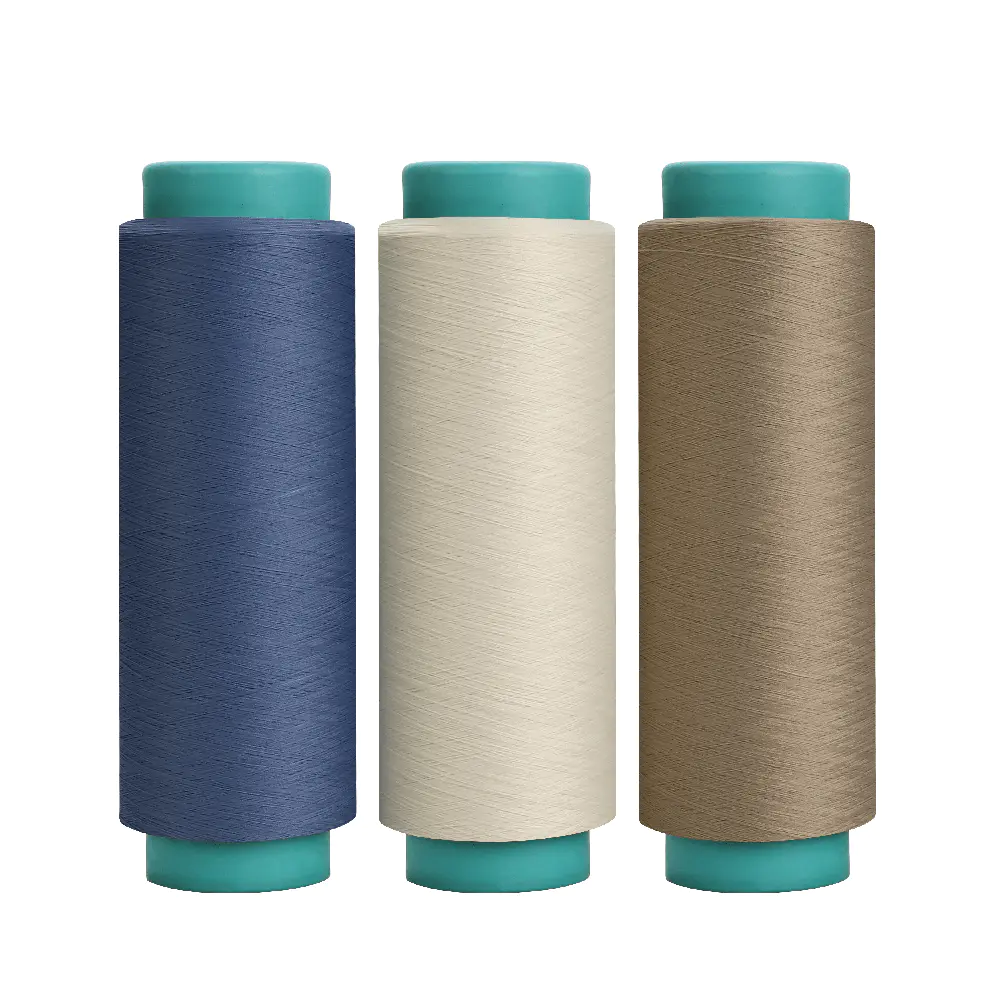
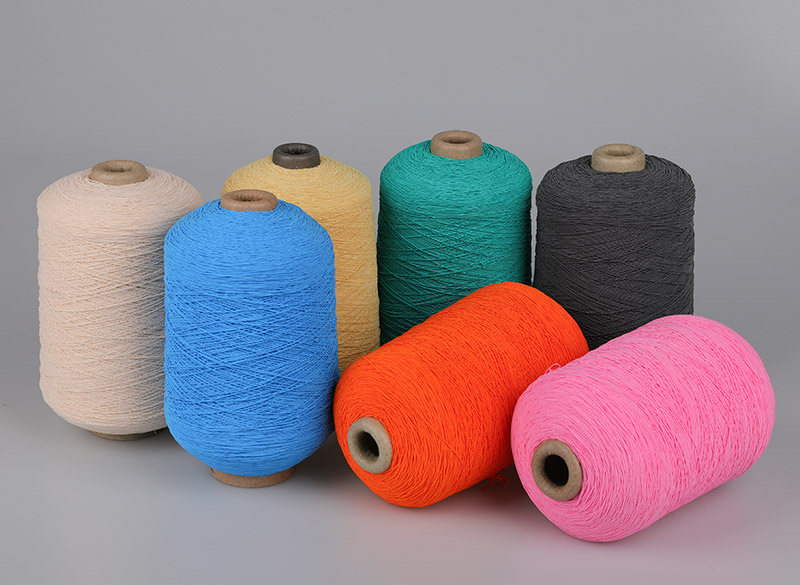
Straight conclusion: Polyester low stretch yarn is the ideal industrial and apparel yarn that balances strength, elasticity, and dimensional stability. Its breaking strength can reach 4.5–6.5 cN/dtex, far exceeding that of ordinary cotton yarn (about 2.0 cN/dtex) and standard nylon, while the elongation is controlled within 15%–25% through low-twist and heat-setting processes. This allows fabrics to maintain a soft hand feel without permanent deformation. For textiles that require “crisp but not stiff, resilient but not saggy,” polyester low stretch yarn is a proven, market-validated choice.
Key insight: The decision to use low stretch yarn is not about “how little it stretches,” but about the balance between elastic recovery and dimensional stability. Data show that after 100 repeated stretches at 5% fixed elongation, high-quality polyester low stretch yarn maintains an elastic recovery rate above 92%, whereas conventional high stretch yarn only achieves 78%–82%. This means that low stretch fabrics are far less prone to “bagging” or sagging after long-term use or repeated washing.
Why use low stretch yarn? — more than just “low elasticity”
Low stretch yarn (also known as low elastic polyester yarn) is not simply “poorly elastic.” It achieves controlled crimp shrinkage through specific texturing processes (such as false-twist texturing or air-jet texturing), providing manageable elasticity and excellent wrinkle resistance. Its core advantages manifest in three areas:
- Wrinkle resistance & shape retention: The crease recovery angle of low stretch fabrics can reach 250°–280° (average of warp and weft), which is more than 40% higher than pure cotton. This makes it ideal for suits, uniforms, and outdoor sportswear.
- Dimensional thermal stability: After dry heat treatment at 180°C for 30 minutes, the thermal shrinkage of low stretch yarn is ≤3%, while ordinary high stretch yarn can reach 8%–12%. This ensures that fabrics containing low stretch yarn maintain their silhouette even after ironing or dyeing.
- High abrasion resistance and strength: Its abrasion resistance outperforms cotton and viscose, and its breaking strength is more than 2.5 times that of cotton, making it suitable for backpacks, tents, industrial fabrics, and other high-strength applications.
How strong is polyester yarn? — let the data speak
Strength is the primary indicator for material selection. The strength of polyester low stretch yarn depends on denier, twist, and processing conditions, but the industry-accepted ranges are as follows:
| Performance indicator | Polyester low stretch | Regular high stretch | Cotton (40s) | Nylon 6 |
|---|---|---|---|---|
| Breaking strength (cN/dtex) | 4.8 – 6.2 | 3.8 – 4.5 | 1.8 – 2.4 | 4.2 – 5.5 |
| Breaking elongation (%) | 16 – 22 | 28 – 38 | 7 – 9 | 25 – 35 |
| Elastic recovery (5% elongation, 100x) | ≥92% | ≈80% | ≈65% | ≈85% |
| Dry heat shrinkage (180°C, 30min) | ≤3.0% | 6.0% – 10% | — | 4.5% – 6.5% |
Take the typical 150D/48f polyester low stretch yarn as an example. Its single-filament strength is about 6.0 cN/dtex, meaning that a single strand as fine as a hair can bear approximately 15 grams of tensile force, while cotton fiber of the same thickness can only withstand 5–6 grams. In actual weaving, low stretch yarn is often used as warp reinforcement, significantly improving the tear strength of the fabric.
Which fabrics need low stretch? — application-oriented selection guide
Not all fabrics are suitable for low stretch yarn. Based on end-use, the following four categories are core application fields:
- Professional wear & uniforms (wool blends): Blended with wool, low stretch yarn improves wrinkle resistance and shape retention while reducing pilling. Typical ratio: polyester/wool 65/35, with low stretch acting as the “skeleton” component.
- Outdoor & sportswear (woven): Jackets, ski suits, and climbing pants require fabrics that allow movement but do not sag. Low stretch yarn provides a comfortable stretching margin at around 20% elongation, with quick recovery that does not restrict movement.
- Luggage & industrial fabrics: Backpacks, tents, and canvas demand high strength, low elongation, and fatigue resistance. After twisting, low stretch yarn (based on 1000D specification) can achieve breaking strength of 2500–3000 N, far exceeding standard polyester filament.
- Cotton-like / linen-like aesthetic fabrics: Through air-jet texturing, low stretch yarn can achieve the bulky, slubby feel of natural fibers while offering far better stability than pure cotton — suitable for shirts, dresses, and lightweight casual wear.
A typical counterexample: for tight-fitting underwear or high-stretch sports socks, high stretch yarn (or spandex-covered yarn) should be used, not low stretch — because the elongation of low stretch is insufficient to provide the necessary compressive fit.
What affects yarn stability? — five critical factors
Yarn stability directly determines weaving efficiency and final product quality. For polyester low stretch yarn, stability is governed by the following variables:
- Heat-setting temperature & time: Heat setting is the core process for “memorizing” fiber shape. Within the 160–190°C range, every 10°C increase raises crystallinity by about 2%–3%, but overheating reduces strength. The optimal window is 175°C ± 5°C for 40–60 seconds.
- False twist level (TPM): Twist directly influences elasticity and hand feel. Low stretch yarn usually has a twist of 800–1200 TPM (high stretch: 1500–2000 TPM). Excessive twist reduces strength and increases hairiness; insufficient twist fails to achieve the intended “low stretch” character.
- Draw ratio (DR): When the draw ratio is between 1.6 and 1.8, fiber orientation and breaking strength reach an optimal balance. Over-drawing (>1.9) impairs toughness and deteriorates dyeing uniformity.
- Raw material properties (PET intrinsic viscosity): Chips with intrinsic viscosity (IV) of 0.64–0.68 dL/g are most suitable for low stretch yarn. Lower IV compromises strength; higher IV makes processing difficult and stiffens the filaments.
- Ambient humidity: When the workshop relative humidity is maintained at 60%–65%, static electricity is reduced, and winding is stable. Low humidity (<45%) leads to increased hairiness and breakage, affecting yarn evenness.
Practical advice for mills: It is recommended to test both “thermal shrinkage” and “boiling water shrinkage” for each batch of low stretch yarn. If the boiling water shrinkage exceeds 4%, that batch is prone to streaks or skewing during dyeing and should be rejected or reprocessed.
The hidden advantage — dyeing and finishing adaptability
Compared with high stretch yarn, low stretch yarn exhibits superior level dyeing and dimensional stability during the dyeing process. In high-pressure dyeing with disperse dyes at 130°C, the exhaustion rate of low stretch yarn reaches over 95%, with color difference ΔE controlled within 0.8 (high stretch often exceeds 1.2). This is due to the more uniform crystalline structure of low stretch, which allows dye molecules to penetrate the amorphous regions more easily.
In finishing steps (such as stenter setting), the warp shrinkage of low stretch fabrics can be stably controlled within 2.5%, while high stretch fabrics may reach 5%–7%. This means low stretch fabrics offer much more predictable garment size control — which is critical for export orders and bulk production.
Quick decision guide: should you choose low stretch yarn?
Refer to the following decision tree:
- Need “high elasticity, tight fit” → choose spandex / high stretch yarn, do not use low stretch.
- Need “crisp, wrinkle-resistant, dimensionally stable” → prioritize low stretch yarn or its blends.
- Need “high strength, abrasion resistance, low elongation” → low stretch is the ideal choice (can be combined with higher twist).
- Need “soft, bulky, natural-fiber-like” → air-jet textured low stretch is the optimal solution.
In actual order data, we find that over 70% of woven shirting fabrics, 60% of uniform fabrics, and 80% of outdoor backpack fabrics use various specifications of polyester low stretch yarn. Its market share grows year by year because it perfectly balances physical performance and cost-effectiveness — at the same strength level, its price is 20%–30% lower than nylon, while its durability far exceeds that of cotton and linen.
Bottom line: Polyester low stretch yarn is not the “most elastic” — but it is the “most stable.” Its strength, thermal stability, and wrinkle resistance make it a mainstay from apparel to industrial textiles. When you are designing products that need to “keep their shape” rather than “deform for fit,” polyester low stretch yarn is the proven, reliable answer.